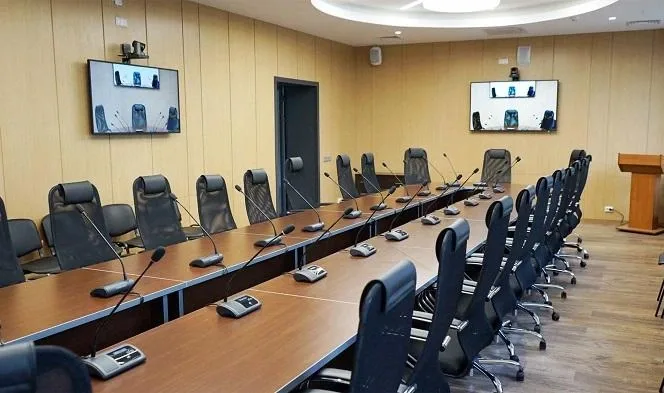
Bosch splits its range in two. CCS 900 Ultra is analogue and commissions without configuration software, which suits fixed boardrooms that value speed of installation. CCS 1000 D is digital, set up from a web browser, and adds request-to-speak queueing plus camera-control triggers. The CCSD-CURD variant records the meeting to USB storage, which matters where the audio record forms part of the minutes.
TOA's listed conference range spans compact through formal meeting-room applications, including the TS-820 and TS-900 series. The TS-918 expansion unit provides a defined route to add compatible member positions without replacing the corresponding central unit.
The listed CMX range covers wired digital, wireless, infrared, and paperless meeting options. The WS and US series cover wired discussion, the 5G and UHF series support flexible table layouts, and the MC series adds paperless meeting hosts for agenda and document workflows.
SPON covers the discussion chain together with the wider room audio: chairman and delegate units, a central control unit, DSP, network amplification, wireless access points, and charging. That makes it a practical choice where the conference system has to integrate with building paging rather than stand alone.
Across all four brands the deciding questions are the same: how many positions the room needs today and after expansion, whether the table can take cable, whether sessions must stay acoustically contained, and whether the audio record has to be archived. Sasha Corporation can work through those with you before a BOQ is prepared.