Quick Summary
- Used for advertising, information display, and brand communication.
- Indoor LED Display: Best for close viewing in malls, showrooms, offices, and halls. Usually finer pitch and better detail quality.
- Pixel pitch and screen resolution target.
Introduction
Choosing an LED display starts with the viewing environment, audience distance, content requirements, and expected operating schedule. This guide explains how those practical needs influence display type, pixel pitch, components, installation planning, and the overall project budget.
For available models and current planning details, visit our . For topic-specific options, see our .
Table of Contents
Section 1
What is LED Display
An LED display is a digital screen built from light-emitting diode modules that can show text, images, and video content in real time. It is commonly used for branding, advertising, announcements, and live information.
Compared to traditional signboards, LED displays offer better visibility, remote content update, and stronger audience engagement. This is why businesses in Bangladesh are increasingly choosing LED video wall solutions for both indoor and outdoor communication.
Buyers often focus only on the panel rate. In reality, display quality, control system, power setup, and installation conditions all affect final value and long-term performance.
- Used for advertising, information display, and brand communication.
- Supports text, video, image, and dynamic content schedules.
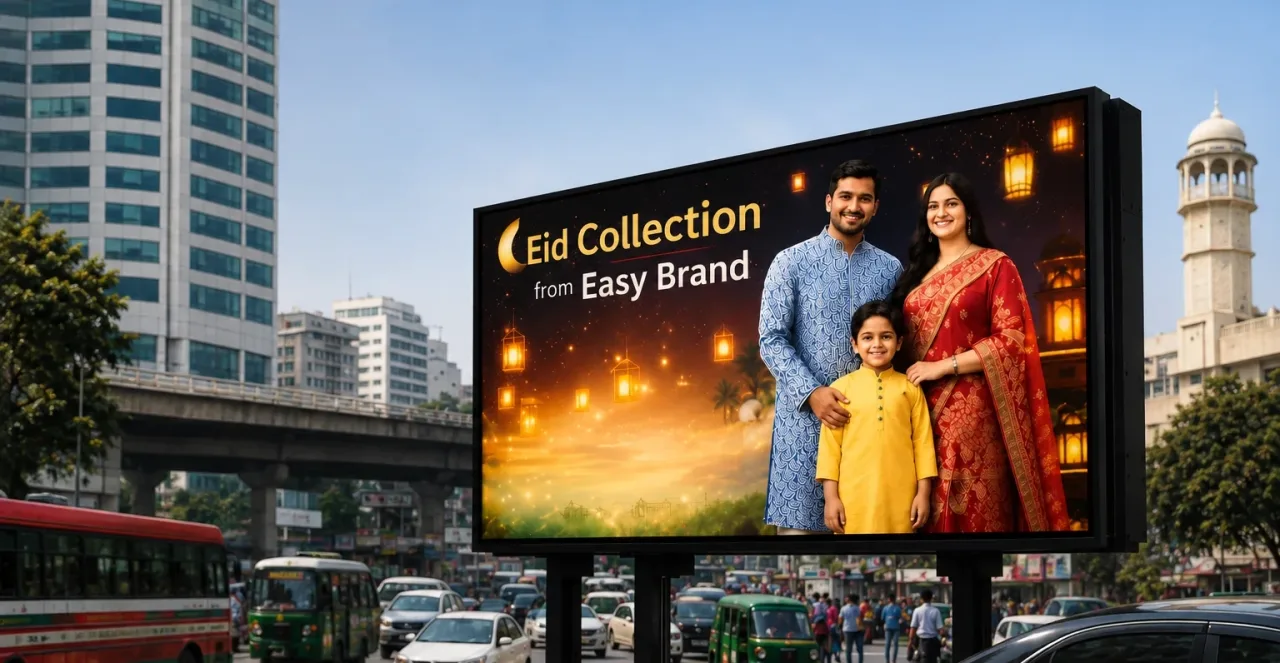
- Can be configured as indoor wall, outdoor billboard, or rental screen.
Section 2
Types of LED Display
Before comparing led video wall price, first identify which display type matches your use case. The market mainly has three categories: indoor, outdoor, and rental LED display.
Each type has different brightness, protection level, and price behavior. Choosing the wrong type can lead to poor visibility or unnecessary cost.
- Indoor LED Display: Best for close viewing in malls, showrooms, offices, and halls. Usually finer pitch and better detail quality.
- Outdoor LED Display: Built for sunlight and weather exposure. Higher brightness and stronger protection standard.
- Rental LED Display: Designed for temporary events and stage use where fast setup and dismantle are required.
Section 3
What Shapes the Total Project Cost
A project budget is not determined by the per-square-foot rate alone. Final cost depends on technical specification, component quality, and installation environment.
Pixel pitch is one of the biggest price drivers. Smaller pitch gives higher clarity for close viewing, but it also increases cost.
Other major factors include cabinet build quality, controller brand, power supply class, brightness requirement, and whether the site needs custom structure or electrical safety work.
For accurate quotation, you need a full scope: screen size, location condition, viewing distance, runtime, and content use pattern.
- Pixel pitch and screen resolution target.
- Indoor vs outdoor durability requirements.
- Controller, receiving card, and power supply ecosystem.
- Installation complexity, structure, and electrical preparation.
- After-sales warranty, maintenance plan, and spare policy.
Section 4
Project Budget Range Planning
The following ranges are practical budget references for initial planning. Final project cost can vary by project scope, brand class, and installation condition.
Use this table as a directional estimate, then finalize through site survey and BOQ-based quotation.
| Display Type | Typical Pitch Range | Approximate Budget Trend |
|---|
| Indoor LED Display | Fine to medium pitch | Medium to high (depends on clarity requirement) |
| Outdoor LED Display | Medium to wider pitch | Medium to high (depends on brightness and structure) |
| Rental LED Display | Event-focused pitch classes | Project-based pricing (setup duration and scale dependent) |
Section 5
How to Choose the Right LED Display
Start with environment and viewing distance, not with random model names. This one decision removes most buying confusion.
Then match content type, operating hours, and budget range. For text-heavy close-view use, prioritize finer pitch. For daylight outdoor visibility, prioritize brightness and weather protection.
Always calculate lifecycle value: stability, maintenance, service support, and upgrade path. A cheaper initial price can become expensive if downtime and repair frequency are high.
- Define use case first: branding, advertising, information, or events.
- Validate indoor/outdoor suitability from real site condition.
- Balance pitch and budget according to actual viewing distance.
- Check component compatibility and supplier service reliability.
Section 6
How to Evaluate a Display Solution Provider
A suitable solution provider is not simply the company offering the lowest quote. Look for correct technical recommendations, transparent pricing, quality installation, and long-term after-sales support.
When evaluating providers, review project references, commissioning process, and support response capability. This is especially important for business-critical screens.
For a stable result, choose a team that can handle end-to-end delivery: site survey, display selection, structure planning, installation, calibration, and service.