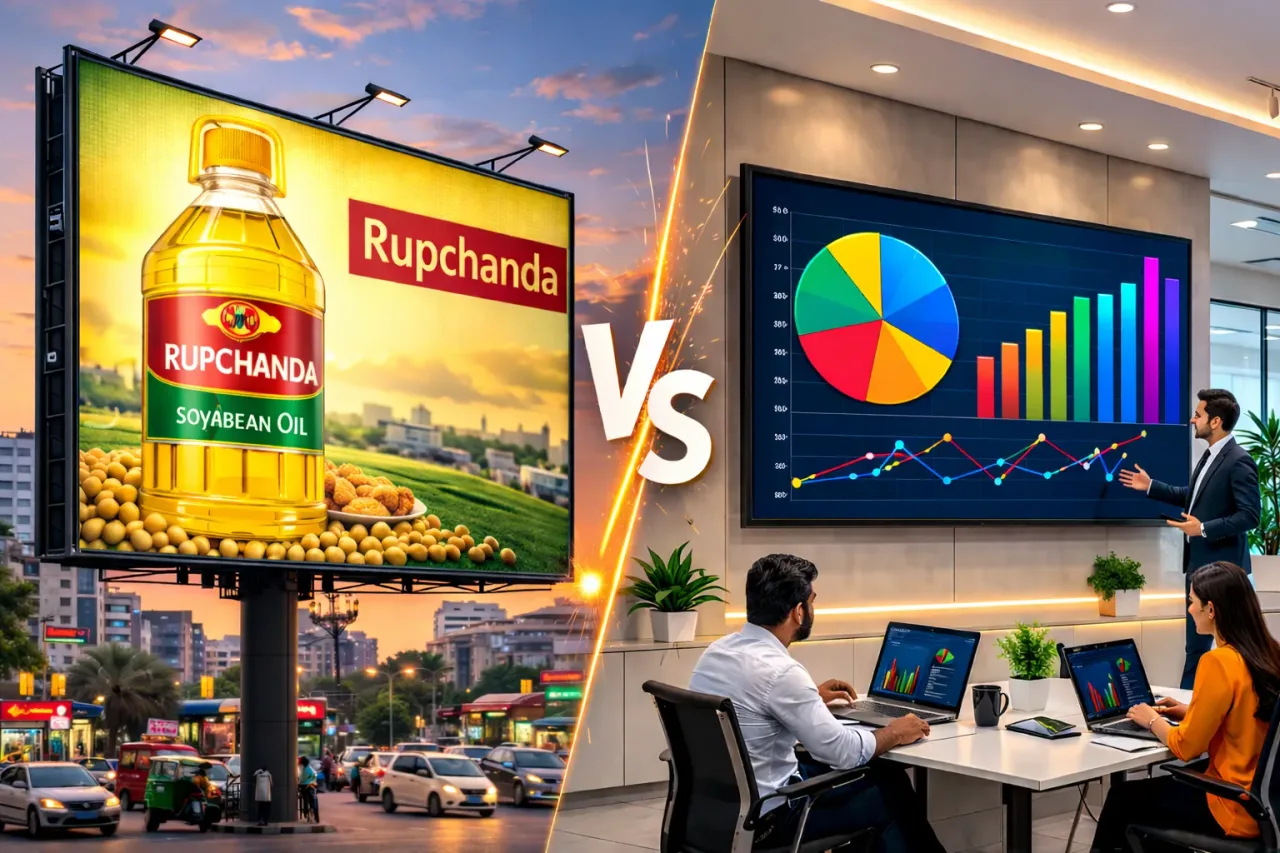
Quick Summary
- Best for close-distance viewing where text readability is important.
- Designed for sunlight visibility and long-distance viewing.
- The table below highlights the most important differences between indoor and outdoor LED display. Use this comparison when you prepare BOQ or discuss requirements with your supplier.
Introduction
Complete comparison guide for indoor vs outdoor LED display: technical differences, use-case mapping, cost logic, and final buying decision checklist. The sections below explain the practical choices, trade-offs, and planning details to review before selecting a solution or requesting a quotation.
For available models and current planning details, visit our .
Table of Contents
Section 1
What is Indoor LED Display
Indoor LED display is a high-clarity screen system designed for enclosed environments where viewers are usually near the screen. Common examples include retail showrooms, corporate lobbies, conference halls, hotel reception areas, and control room video walls.
The main strength of indoor LED is visual detail. Since people watch from a shorter distance, indoor displays are typically built with finer pixel pitch so text and graphics look smooth and sharp.
Indoor models usually require lower brightness than outdoor screens because they are not fighting direct sunlight. This helps achieve better viewing comfort, color balance, and energy efficiency in controlled lighting conditions.
For businesses, indoor LED works best when message clarity and brand presentation quality are the top priority. Product promos, menu boards, dashboards, and branded motion graphics are common indoor applications.
- Best for close-distance viewing where text readability is important.
- Usually uses finer pitch to deliver cleaner typography and detailed visuals.
- Lower brightness than outdoor screens, but better comfort for indoor audiences.
- Ideal for showrooms, meeting spaces, reception walls, and digital signage indoors.
Section 2
What is Outdoor LED Display
Outdoor LED display is a heavy-duty screen solution built for open-air use, where sunlight, rain, dust, wind, and heat can affect both visibility and hardware life.
To stay visible in daytime, outdoor LED uses much higher brightness than indoor models. It is also built with weather-protection standards that help the screen continue operating during monsoon and dusty conditions.
Outdoor cabinets are generally stronger in structure and require better power, grounding, and safety planning. This is why outdoor installations must consider not only display quality but also electrical and structural reliability.
If your screen is visible from road traffic, building exteriors, or public outdoor areas, outdoor LED is usually the safer and more stable choice long term.
- Designed for sunlight visibility and long-distance viewing.
- Stronger cabinet protection against rain, dust, and temperature variation.
- Suitable for roadside billboards, facade branding, and public messaging.
- Needs robust structure, grounding, and surge protection planning.
Section 3
Key Differences (table)
The table below highlights the most important differences between indoor and outdoor LED display. Use this comparison when you prepare BOQ or discuss requirements with your supplier.
A quick rule: if environment exposure and daytime visibility are major concerns, outdoor specifications should be prioritized even if budget is slightly higher.
| Feature | Indoor LED Display | Outdoor LED Display |
|---|
| Brightness | Lower, controlled for indoor lighting | Much higher for direct sunlight visibility |
| Weather Protection | Not weatherproof | Weatherproof and dust-resistant |
| Pixel Pitch | Usually finer for close viewing | Usually wider for longer viewing distance |
| Use Environment | Indoor spaces | Open and semi-open outdoor locations |
| Maintenance Exposure | Lower environmental stress | Higher stress due to weather and dust |
| Viewing Distance | Short to medium distance | Medium to long distance |
| Power and Safety | Simpler power design in controlled spaces | Requires stronger grounding and surge planning |
| Structure Requirement | Lighter structure in most cases | Heavier-duty mounting and wind-load consideration |
| Operating Cost Pattern | Generally lower environmental wear cost | Can require more preventive maintenance |
Section 4
Where Each Display is Used
Indoor LED display is ideal for locations where people stand close to the screen and need clear details. Typical use cases include shopping mall screens, electronics showrooms, meeting room backdrops, hospital information walls, and indoor directional signage.
Outdoor LED display is best for high-visibility communication where the audience is moving or distant. Examples include roadside advertising boards, transport hubs, building facades, event entry gates, and public awareness campaigns.
Some locations are semi-open, such as glass-front shops facing direct sunlight. In these situations, indoor specification may look fine at night but perform poorly in daytime. Site exposure analysis is essential before final selection.
If your business depends on all-day visibility and weather resilience, outdoor-grade solution is usually more reliable even when first cost is higher.
- Indoor: showroom branding, reception message wall, conference visuals, control room dashboards.
- Outdoor: billboard advertising, real estate project signage, station terminals, municipality announcements.
- Semi-open sites should be tested for sunlight exposure before selecting indoor models.
Section 5
Which One Should You Choose
Choose indoor LED display when your installation area is enclosed, audience distance is short, and fine visual quality is your main objective. Indoor models usually provide better text clarity for close viewers and can be more efficient in controlled lighting.
Choose outdoor LED display when your screen is exposed to sunlight, rain, dust, or wide public viewing distance. Outdoor screens are engineered for brightness and durability, which protects your communication quality across daytime and seasonal weather changes.
Before final buying decision, verify these five points: site environment, average audience distance, content type (text/video/mixed), daily runtime, and maintenance access. This process prevents under-spec or over-spec purchase.
If budget is tight, do not compromise on environment compatibility. Wrong environment match creates repeated repair, poor visibility, and early replacement costs that are usually higher than initial savings.
- For enclosed spaces with close audience: indoor is usually the right choice.
- For outdoor exposure with high sunlight: outdoor is usually mandatory.
- Always validate pitch, brightness, and structure based on real site survey.
- Use lifecycle cost (uptime + maintenance) instead of purchase price only.