
Large-format digital advertising screen
A billboard LED display is a high-brightness outdoor screen built for long-distance visibility in roads, intersections, and public commercial zones.
Billboard LED display is designed for high-impact outdoor advertising in Bangladesh, where visibility, durability, and clear messaging directly affect campaign results. Use this page to evaluate LED billboard screen options by pixel pitch, brightness (nits), refresh quality, cabinet weather protection, and control system stability so your content remains readable in daylight, traffic-heavy roads, and long-distance viewing zones. Whether you are planning a highway billboard, city branding panel, retail frontage display, or location-based promotional screen, these comparison points help you estimate practical budget, reduce installation risk, and choose a reliable outdoor LED solution for long-term brand communication.
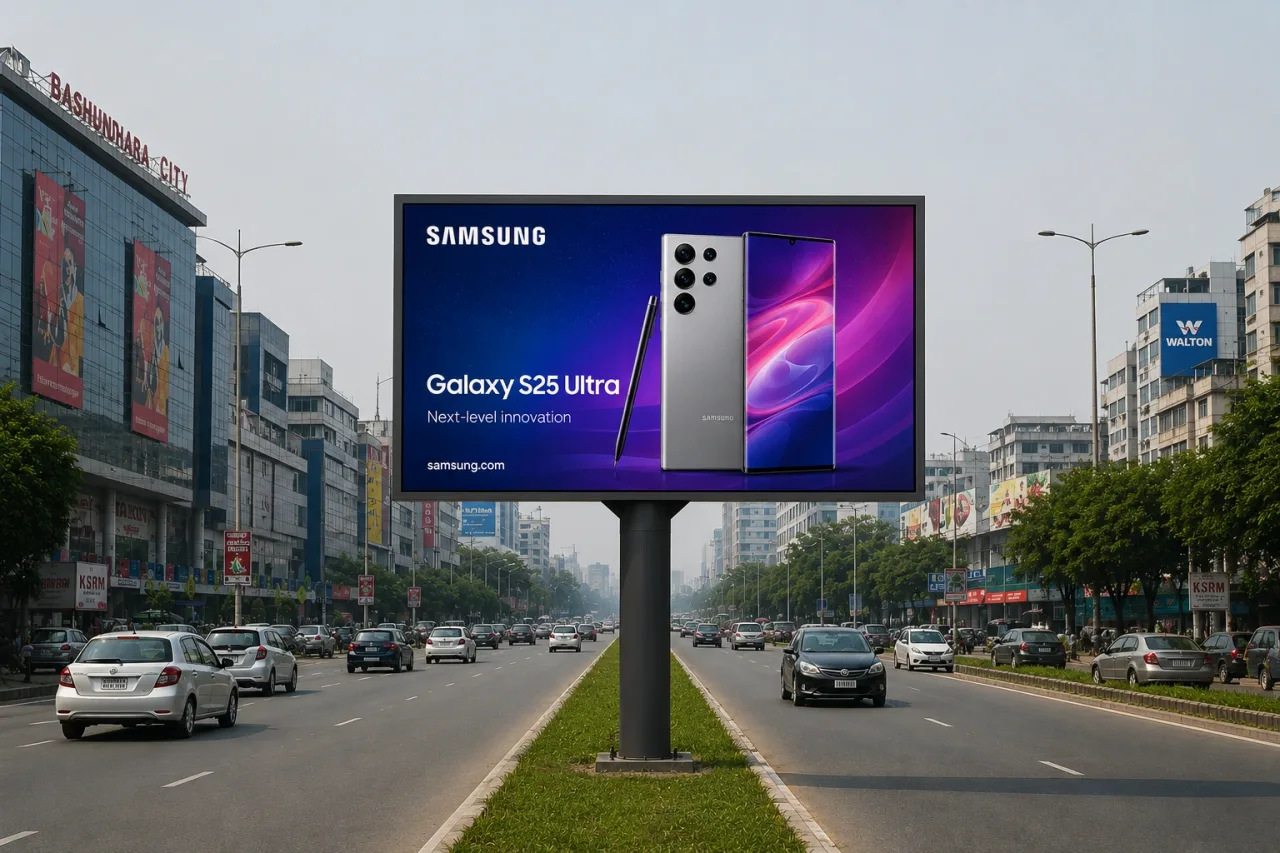
Browse outdoor model cards commonly used in billboard and roadside communication projects.

Pixel pitch: 2.5 mm
৳10,400 - ৳11,400 (per sq.ft)
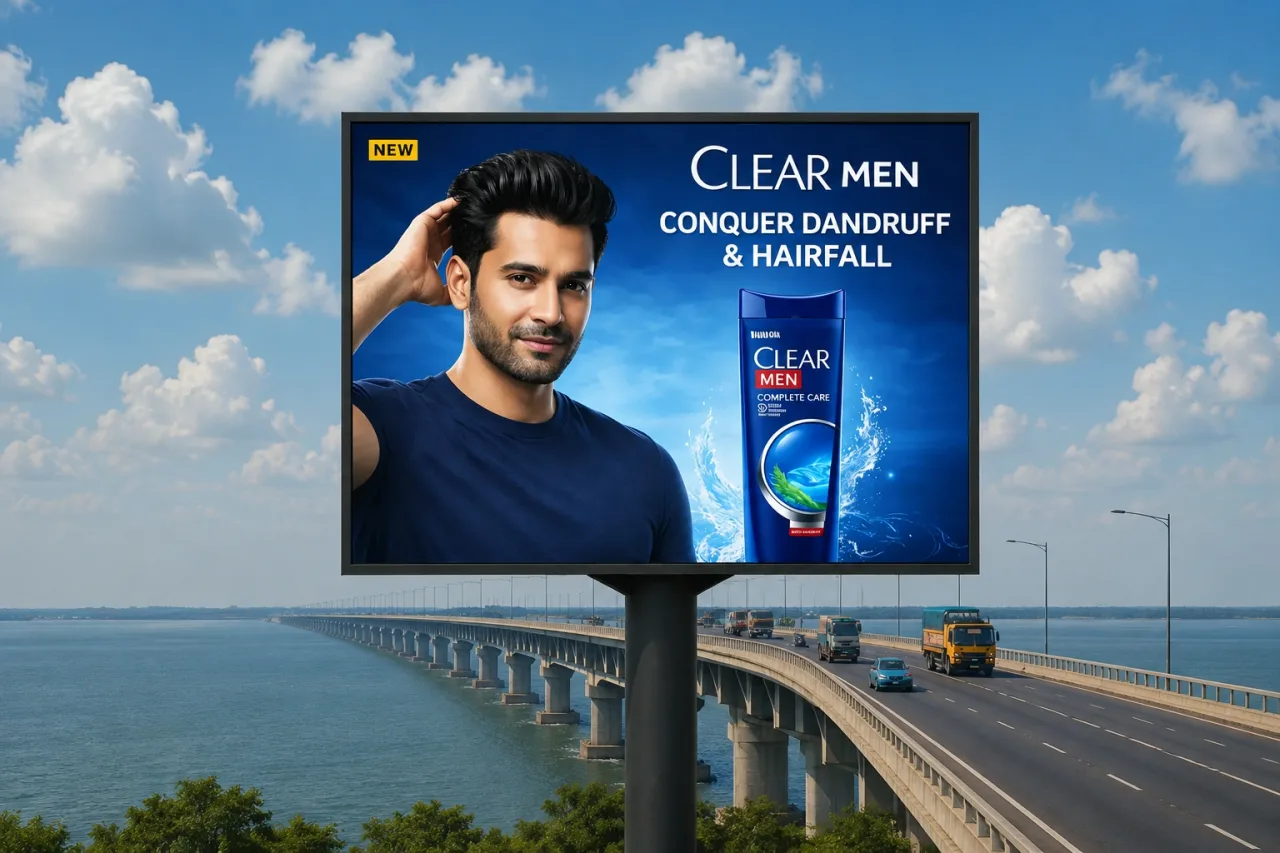
Pixel pitch: 3 mm
৳9,855 - ৳10,399 (per sq.ft)
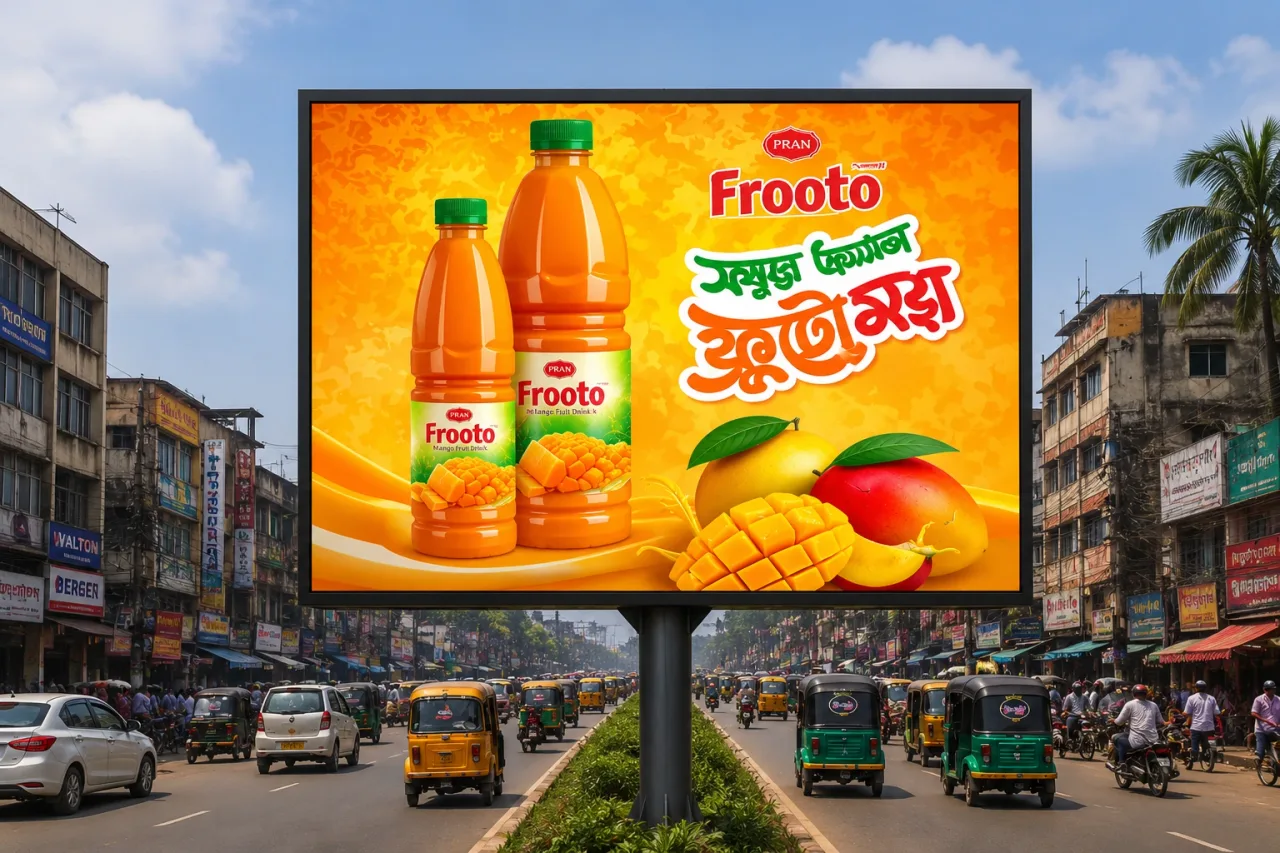
Pixel pitch: 3.076 mm
৳9,310 - ৳9,854 (per sq.ft)
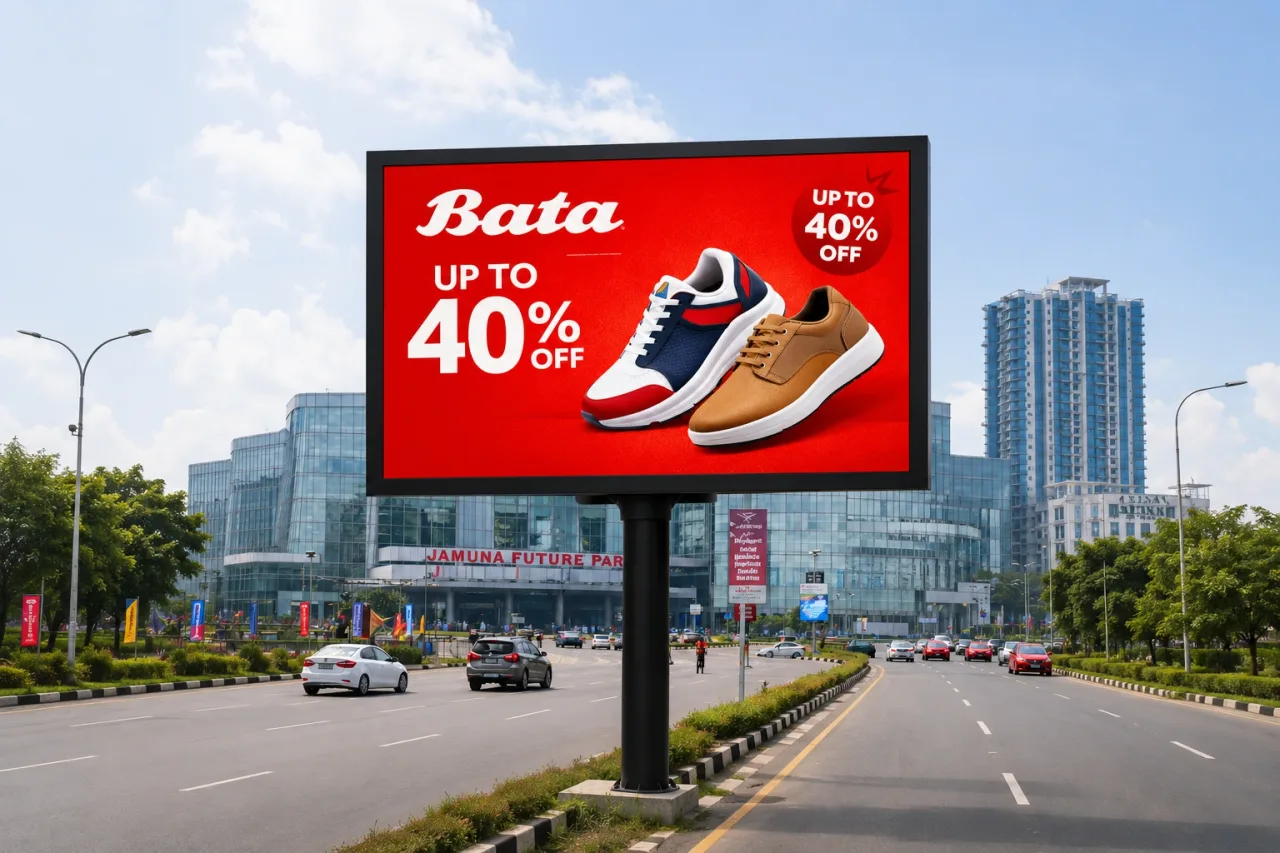
Pixel pitch: 4 mm
৳8,765 - ৳9,309 (per sq.ft)
Pixel pitch: 5 mm
৳8,220 - ৳8,764 (per sq.ft)

Pixel pitch: 6 mm
৳7,675 - ৳8,218 (per sq.ft)
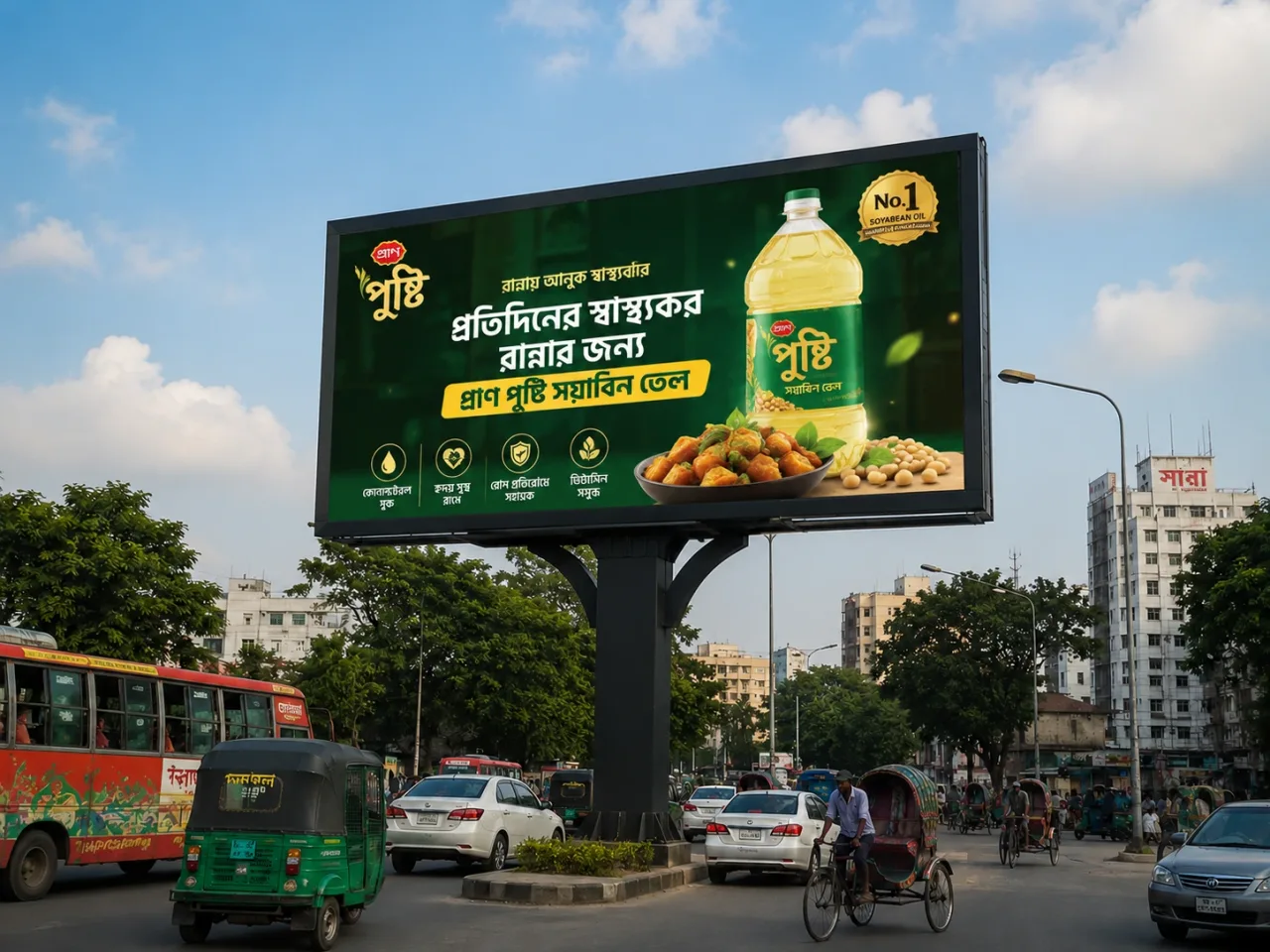
Pixel pitch: 6 mm
৳7,500 - ৳8,500 (per sq.ft)
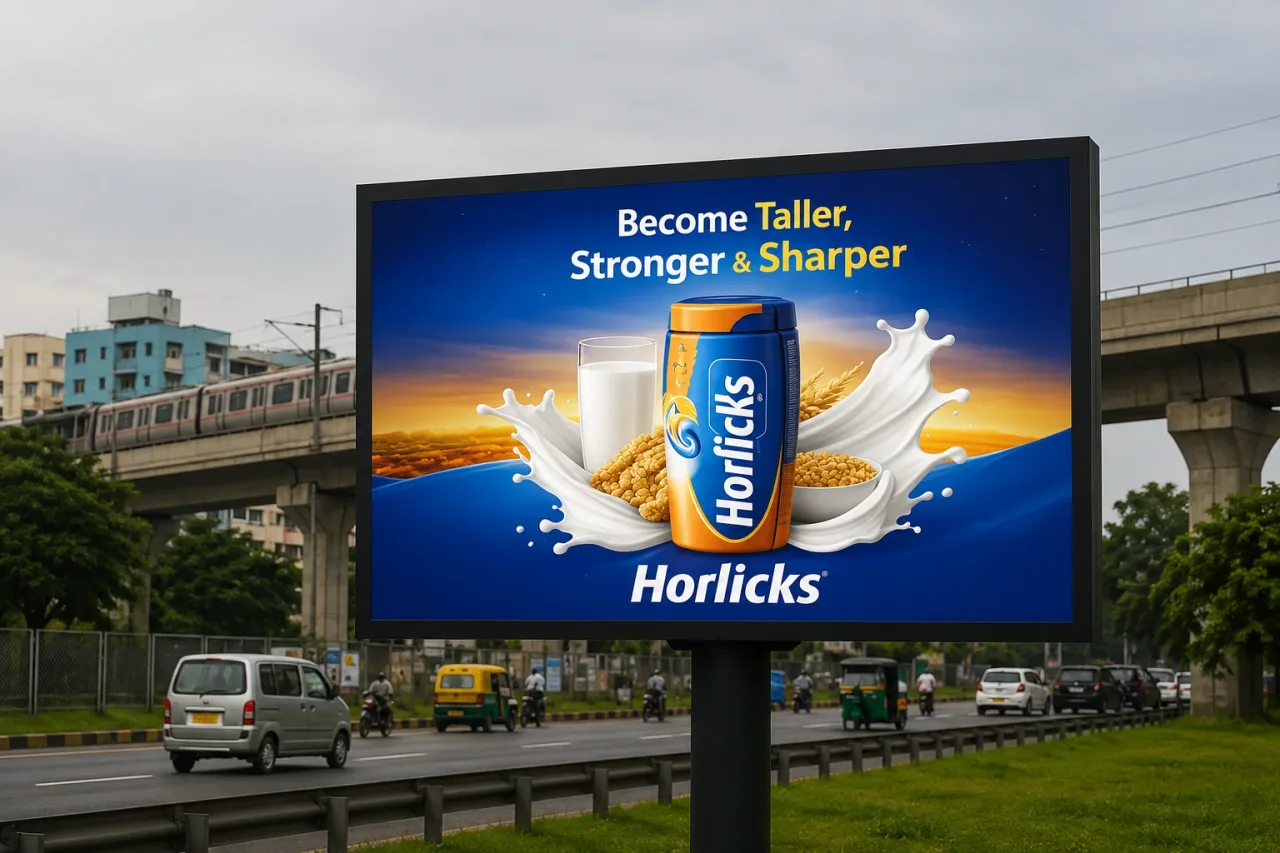
Pixel pitch: 6.67 mm
৳7,130 - ৳7,674 (per sq.ft)
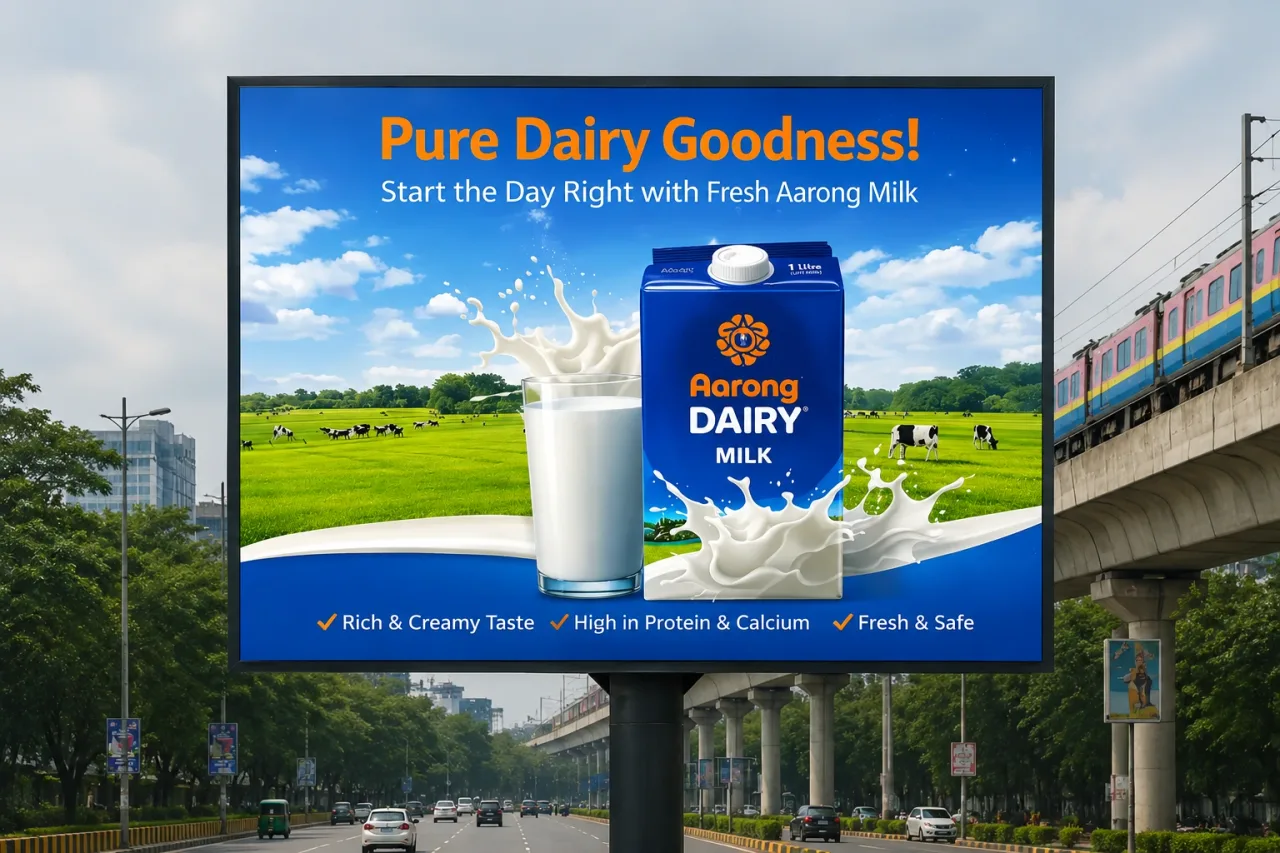
Pixel pitch: 8 mm
৳6,585 - ৳7,129 (per sq.ft)
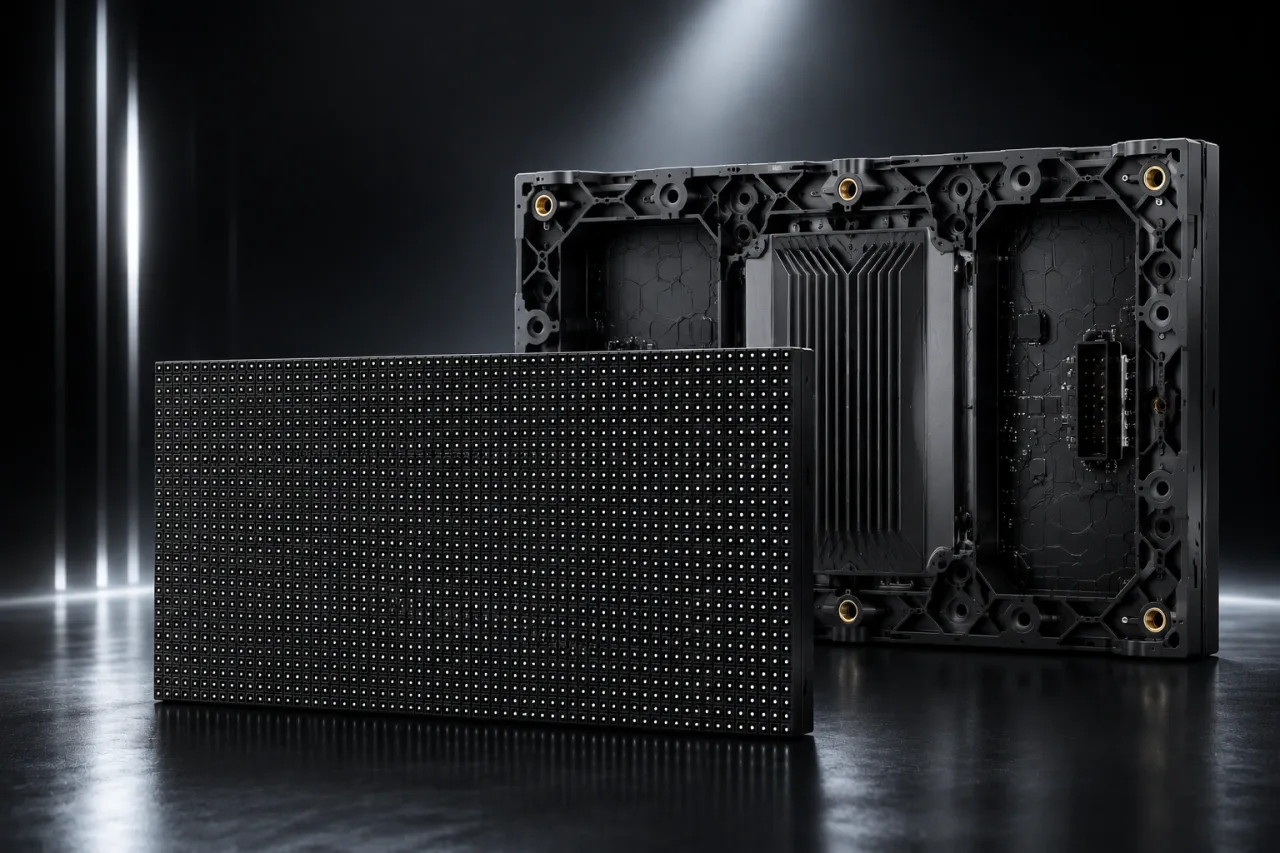
Pixel pitch: 10 mm
৳4,500 - ৳5,000 (per sq.ft)
A billboard LED display is a high-brightness outdoor screen built for long-distance visibility in roads, intersections, and public commercial zones.
Unlike printed boards, digital billboard media can be changed by schedule, campaign, or time slot without replacing physical material.
Outdoor-grade cabinet, protection stack, and power planning are used to keep content stable in rain, dust, and heat-heavy environments.
We review traffic direction, viewing distance, and surrounding light condition before suggesting size, pitch, and placement strategy.
Billboard hardware, structure, controller scope, and power safety are mapped into a practical budget with clear performance expectation.
Our team completes installation, calibration, safety checks, and playback verification before the billboard goes live.
We define monitoring, preventive maintenance, and service response planning to keep campaign uptime consistent after deployment.
Advantage: Dynamic content and measurable campaign flexibility
Consideration: Higher initial setup than static boards
Advantage: Lower initial print setup
Consideration: No dynamic scheduling and recurring print replacement
Billboard performance depends on placement quality as much as hardware quality. A location-first review helps avoid visibility loss, unstable operation, and avoidable rework after deployment.
Screen direction should align with audience movement pattern for maximum readability.
Brightness planning should consider day glare, rain season, and dust-heavy roadside conditions.
Safe mounting and service access reduce maintenance downtime in high-elevation locations.
Reliable power routing and signal continuity are critical for uninterrupted campaign delivery.
Panel specification, brightness class, cabinet type, and control architecture.
Foundation, mounting frame, and load compliance engineering.
MCB line, grounding, surge protection, and panel isolation practices.
Content scheduling, health checks, and periodic maintenance planning.
Use this planning table for billboard LED display price in Bangladesh. Final quotation varies by structure scope, installation condition, and site utility readiness.
| Pixel Pitch | Typical Viewing Context | Budget Band | Best Use |
|---|---|---|---|
| P3 - P4 | Closer roadside and premium urban placement | Higher initial hardware budget | Premium city branding panel |
| P5 - P6 | Balanced city and intercity visibility range | Medium to high | Roadside advertising and mixed campaign rotation |
| P8 - P10 | Long-distance highway readability | More cost-efficient per larger area | Highway billboard and large-format outdoor communication |
Pitch selection should match average audience distance to avoid overspending or poor readability in live road conditions.
Recommended: P3 / P4
Sharper detail for slower traffic and close-angle viewing.
Recommended: P5 / P6
Balanced clarity and project cost for busy city roads.
Recommended: P8 / P10
Better visibility economy for long-distance audience attention.
Local road behavior and environment can change hardware and budget decisions even for similar billboard size.
Dense traffic corridor branding and high-frequency campaign scheduling.
Planning focus: Brightness strategy, traffic-angle mapping, and continuous content rotation.
Commercial route visibility and port-adjacent communication boards.
Planning focus: Weather-ready cabinet, power stability, and corrosion-aware structure planning.
Hospitality and city-entry billboard communication.
Planning focus: Readability-focused content layout with balanced pitch selection.
Industrial and roadside promotional display use.
Planning focus: Uptime-oriented maintenance model and stable power architecture.
Education hub and urban junction communication campaigns.
Planning focus: Clear text readability planning, moderate pitch balance, and scheduled content timing.
River-port and district gateway outdoor visibility programs.
Planning focus: Humidity-aware hardware selection, cabinet sealing checks, and reliable power backup.
Regional trade-route awareness and local business promotion boards.
Planning focus: Long-view readability strategy with practical brightness and maintenance planning.
Institutional outreach and city-corridor brand communication.
Planning focus: Balanced pitch and screen sizing with stable controller and preventive service workflow.
Explore outdoor models by pixel pitch and deployment scenario.
Browse indoor, outdoor, rental and accessory options in one place.
Share your billboard size and location for a project-based estimate.
Share location and size to receive project-based estimate.
See weather protection and reliability factors before deployment.
Practical answers to common questions before selecting pitch, brightness, structure scope, and operational planning for outdoor billboard deployment.
Use average audience distance and speed profile. High-speed highway routes often need different sizing logic than city intersections.
Preventive checks are recommended on a periodic schedule based on environment severity, usage duration, and safety exposure.
No. Contrast tuning, content design, panel calibration, and viewing angle all influence final readability.
Usually not. Site context, audience distance, weather risk, and local infrastructure vary significantly by location.