Quick Summary
- LED: modular, scalable, and near-seamless large-format output.
- Close-view detailed indoor content: LCD can be suitable.
- Compare both initial purchase cost and lifecycle cost.
Introduction
Clear comparison between LED video wall vs LCD video wall, including technology, image quality, cost, and practical selection guidance. The sections below explain the practical choices, trade-offs, and planning details to review before selecting a solution or requesting a quotation.
For available models and current planning details, visit our .
Table of Contents
Section 1
Technology Difference
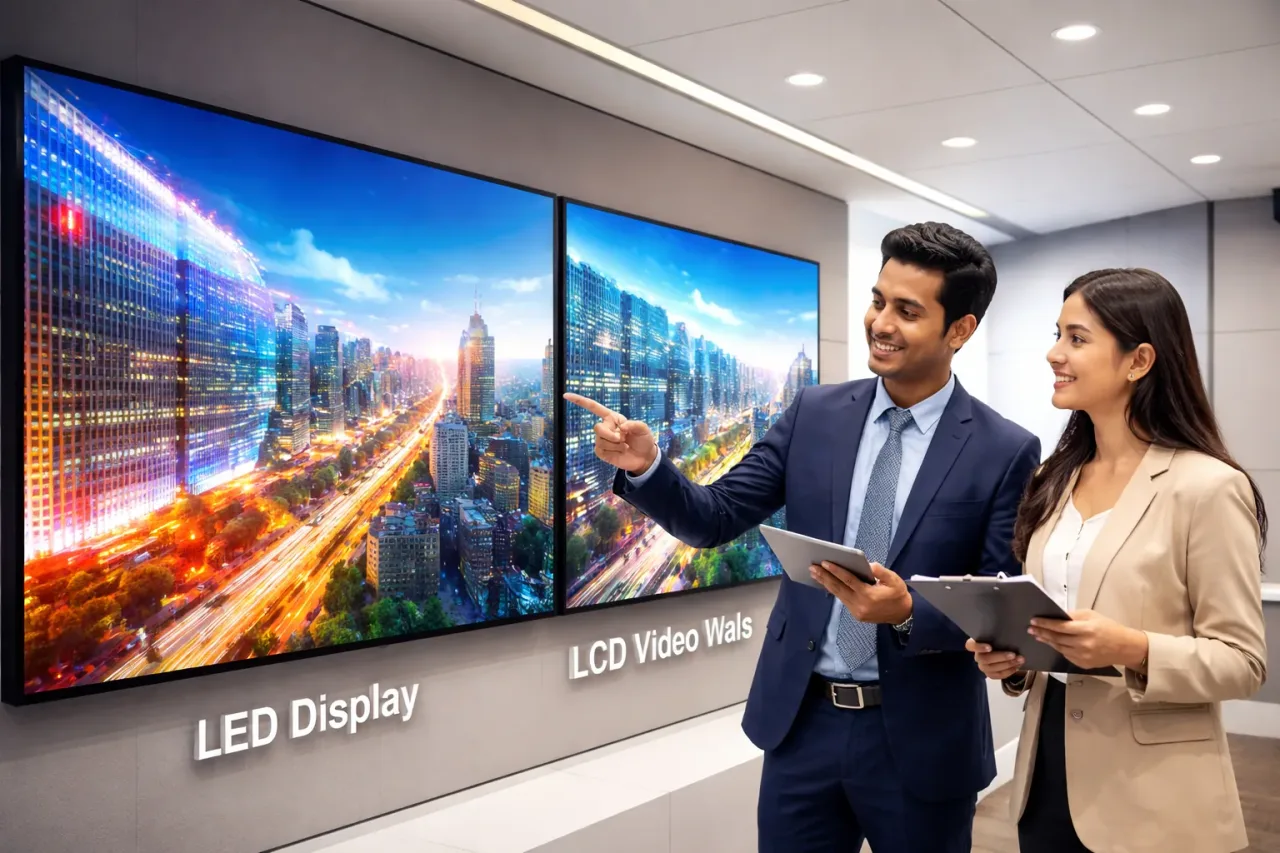
LED video wall uses direct-emitting LED modules to create one large seamless display surface. LCD video wall uses multiple LCD panels joined together in a grid format.
Because LCD panels have bezel lines between screens, a large LCD wall usually shows visible tile boundaries. LED walls are preferred when seamless visual presentation is important.
In short, LED is module-based and scalable with near-seamless viewing, while LCD is panel-based and often selected for controlled indoor environments with close viewing needs.
- LED: modular, scalable, and near-seamless large-format output.
- LCD: panel-based, usually with visible bezels in multi-panel walls.
- LED is stronger for high-impact large displays and long-term visibility.
Section 2
Image Quality Comparison
Image quality comparison depends on viewing distance and content purpose. LCD can look sharp at very close distance in controlled indoor lighting, while LED performs better for larger screens and longer viewing distance.
LED walls offer stronger brightness options and better visibility in challenging light conditions. LCD walls often perform well in meeting rooms or command centers where panel grid lines are acceptable.
For large branding screens and dynamic motion content, LED video wall is usually preferred due to continuity and scale flexibility.
- Close-view detailed indoor content: LCD can be suitable.
- Large, seamless visual impact: LED is usually superior.
- High ambient light and bigger formats: LED generally performs better.
Section 3
Cost Comparison
Initial cost comparison varies by size, pixel density, and application scope. Small indoor walls may favor LCD in upfront budget, while larger seamless walls often shift value toward LED.
Total cost should include installation, serviceability, uptime risk, and lifecycle replacement behavior. A lower initial cost is not always lower long-term cost.
For business-critical communication, lifecycle reliability and scalability should be considered with price, not after price.
- Compare both initial purchase cost and lifecycle cost.
- Evaluate maintenance access, replacement pattern, and downtime risk.
- Use project-specific BOQ for accurate LED vs LCD budgeting.
Section 4
Which One is Better
The better option depends on your use case. If you need a large, seamless, high-visibility display with flexible size options, LED video wall is usually the stronger choice.
If your project is indoor, close-view, and panel bezels are acceptable, LCD video wall can still be practical for certain applications.
Final selection should be based on environment, content type, audience distance, and long-term operating priorities rather than one generic rule.
- Choose LED for seamless large-format communication and higher visual impact.
- Choose LCD for specific indoor close-view scenarios where bezel lines are acceptable.
- Validate decision with site condition and business objective before procurement.